
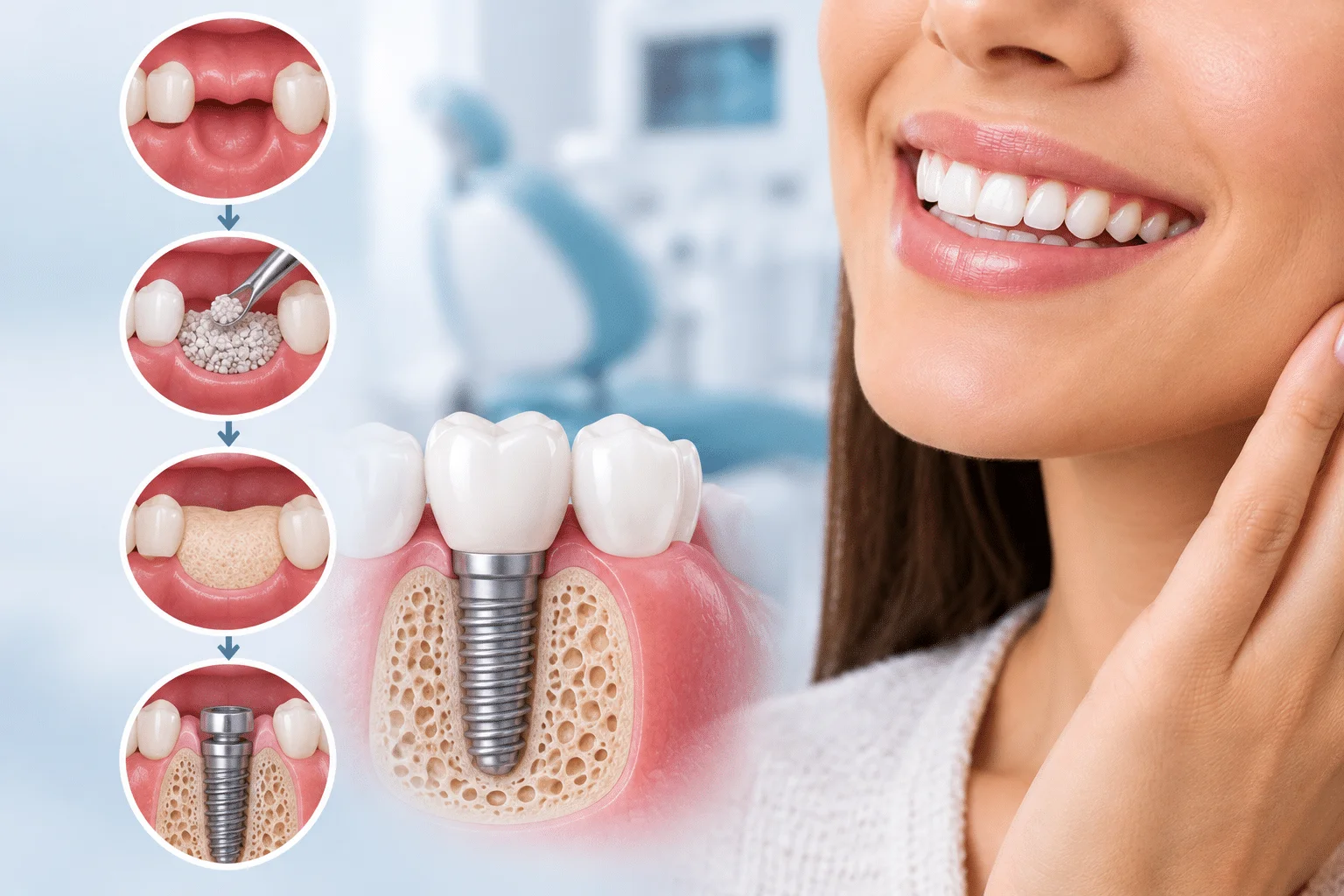
Bone grafting before dental implants may be recommended when there is not enough suitable jawbone at the planned implant site to support the proposed treatment. However, not everyone who has lost a tooth needs a bone graft. The decision depends on the amount and shape of available bone, the location of the missing tooth, nearby anatomical structures and the wider implant treatment plan.
A clinical examination and appropriate imaging help the dentist assess whether the existing bone may be suitable or whether bone augmentation should be considered. For patients exploring dental implants in JLT Dubai, this assessment is an important part of planning because implant treatment should be based on the individual anatomy and the intended final restoration.
If you lose a tooth, or if you have gone some time without one, you may hear the term “bone graft.” Sometimes it comes up because your dentist thinks the jawbone is getting thinner.
Your implant clinician will look at your mouth before anything else. They will measure what you have now. Then they will say if a graft is truly necessary. They should not treat every missing tooth the same. Not every gap needs grafting.
What a Dental Bone Graft Is and What It Is Intended To Do
A dental bone graft is a procedure intended to add or support bone volume in an area where additional bone may be needed for treatment planning.
The grafting material acts as part of a biological process in which the treated area is expected to heal and remodel over time. Depending on the procedure and clinical situation, the aim may be to rebuild or preserve bone volume, improve the dimensions of the implant site or prepare an area for a later stage of treatment.
A bone graft is therefore not an implant itself. It is a separate part of treatment that may be considered when the existing jawbone does not provide the dimensions required for the proposed implant plan.
Different grafting materials and techniques may be used. These can include the patient’s own bone, processed human donor material, animal-derived materials or synthetic bone substitutes. The choice depends on the procedure, the site being treated, the amount and type of augmentation required and the clinician’s assessment.
The important point for patients is that grafting is planned around a specific clinical objective. Your clinician should explain why augmentation is being considered and how it fits into the wider implant treatment sequence.
Why Jawbone Volume Can Reduce After Tooth Loss
The jawbone that surrounds and supports a tooth is partly maintained by the presence and function of that tooth. After a tooth is removed, the surrounding bone can remodel and reduce in volume over time.
The extent and pattern of this change can vary between patients and between different areas of the mouth.
Bone volume may also be affected by factors such as:
- How long the tooth has been missing
- The condition of the bone before the tooth was removed
- Previous infection or periodontal disease
- Trauma or previous surgery
- The location of the missing tooth
- The shape and anatomy of the jaw
- Changes involving the maxillary sinus in the upper back jaw
In the posterior upper jaw, the maxillary sinus is particularly relevant to implant planning. After tooth loss, changes in the bone and the position of the sinus may reduce the available bone height in some patients. In selected situations, sinus augmentation may therefore be considered as part of preparing the area for an implant.
Bone loss does not automatically mean that an implant cannot be considered. It means the available anatomy needs to be assessed carefully before the treatment approach is decided.
Signs and Situations That May Lead to a Graft Recommendation
Situations that may lead to grafting include:
A tooth has been missing for a long time
Bone remodelling can occur after tooth loss. Depending on the site and individual anatomy, this may affect the available bone for implant planning.
There has been significant bone loss around a tooth
Previous periodontal disease, infection or other conditions affecting the supporting structures may influence the amount and shape of remaining bone.
The implant site is close to important anatomical structures
The available space between the planned implant site and nearby structures must be considered. In the upper posterior jaw, the position of the maxillary sinus can affect planning. In other areas, the location of nerves and neighbouring teeth may also be relevant.
The shape of the ridge is not suitable for the proposed implant position
Bone may be present but have insufficient width or height for the planned treatment. Whether augmentation is appropriate depends on the three-dimensional assessment and the restorative plan.
An extraction site has a defect
In some cases, bone defects may be identified at or after tooth removal. Depending on the circumstances, the clinician may discuss preservation or augmentation procedures as part of longer-term planning.
These situations do not automatically mean that a graft is required. Different implant approaches may be considered depending on the anatomy and treatment objectives.
How the Dentist Assesses Bone: Examination, Imaging and Health History
Determining whether a bone graft is needed requires more than looking at the gums. The assessment generally begins with a clinical examination and a review of the missing-tooth area and surrounding teeth.
Your clinician will consider the condition of the oral tissues, the available space and the broader treatment requirements. Appropriate imaging is then used to understand the anatomy of the proposed implant site.
Examination
The clinical examination may include assessment of:
- The missing-tooth area
- The condition of neighbouring teeth
- The gums and supporting tissues
- The space available for the final restoration
- The bite and relationship with the opposing teeth
The planned final tooth restoration should be considered when determining where and how an implant may be placed.
Imaging
For implant planning, three-dimensional imaging with CBCT may be used when clinically indicated to assess bone volume and the relationship of the proposed implant site to relevant anatomical structures. Current clinical recommendations describe CBCT as an important part of presurgical implant planning, particularly when three-dimensional assessment of bone volume or augmentation planning is required.
CBCT is not simply used because a patient is considering an implant. The decision to use imaging should be based on the individual’s clinical needs and follow appropriate radiographic guidance.
Health and dental history
Your clinician will also consider factors that may affect surgical planning and healing. These can include relevant medical conditions, medications, smoking or tobacco use, oral health and previous dental treatment.
Additional planning may be needed for some patients. The aim is not to predict treatment outcomes with certainty, but to identify factors that may influence the procedure, healing or the sequence of care.
Common Grafting Approaches and Sinus Augmentation At a High Level
Bone grafting is not a single procedure. The approach depends on where additional bone is needed and what the implant treatment plan requires.
Broad categories may include:
Ridge preservation or socket grafting
After a tooth is removed, a grafting procedure may sometimes be considered to help preserve the dimensions of the extraction area. Whether this is appropriate depends on the condition of the site and the future treatment plan.
Ridge augmentation
If the jaw ridge does not have the required dimensions for the proposed implant position, bone augmentation may be considered to increase the available bone volume.
Guided bone regeneration
Some augmentation procedures use grafting material together with barrier materials designed to support the regeneration of bone in a planned area. The technique and materials used depend on the specific defect and treatment objective.
Sinus augmentation
A sinus lift, also called sinus augmentation, is a specific procedure used in selected areas of the upper back jaw. It is not simply another name for every type of bone graft.
The procedure includes creating space between the upper jaw and the maxillary sinus. That opening helps the graft material reach the spot where extra bone is needed. The approach can change from case to case. It depends on the patient’s anatomy and the implant planning.
Patients who require a more detailed surgical assessment can also learn about Dental Oasis oral surgery services, which may form part of planning when additional surgical procedures are required.
Bone Graft First or Implant At the Same Visit?
In some situations, bone grafting and implant placement may be performed during the same treatment stage. In other cases, grafting is completed first and the implant is placed after the grafted area has healed and been reassessed.
Neither approach is automatically appropriate for every patient.
The decision may depend on factors such as:
- The amount and location of available bone
- The type of defect being treated
- Whether sufficient implant stability can be achieved
- The quality of the surrounding tissues
- The selected grafting technique
- The patient’s general health and individual risk factors
- The overall implant and restoration plan
Clinical implant timing protocols recognise that the need for bone augmentation can affect the choice and sequence of treatment.
For some sinus augmentation procedures, implants may also be placed at the same time as augmentation in selected circumstances. In other cases, a staged approach may be recommended so that the augmented area can heal before implant placement is planned.
Your implant clinician or oral and maxillofacial surgeon will assess which sequence may be appropriate based on your individual anatomy and treatment requirements.
How Grafting Can Affect the Overall Treatment Timeline
Bone grafting may add an additional stage to implant treatment, particularly when the grafted area needs time to heal before the next stage can be planned.
However, there is no single healing interval that applies to every type of bone graft or every patient.
The timing may depend on:
- The grafting technique used
- The size and location of the augmented area
- The type of grafting material
- The quality of the surrounding bone
- Whether an implant was placed at the same time
- How the treated area heals
- The clinician’s reassessment of the site
For sinus augmentation, published patient guidance describes a healing period that can vary substantially, with the final timing depending on individual circumstances and the treatment approach. Some cases may allow simultaneous implant placement, while others require staged treatment.
This is why a generic promise about how quickly an implant can be placed after a bone graft would not be appropriate.
A treatment timeline should be discussed after assessment and may be adjusted if the clinical situation requires additional healing or review.
Once the implant treatment is complete and the implant site is ready for restoration, the final tooth may be restored according to the treatment plan. Depending on the number of missing teeth and the clinical situation, restorative options may involve crowns or other prosthetic solutions. You can learn more about crowns and bridges as part of understanding how missing teeth may be restored.
Risks, Healing Variables and Who May Need Additional Planning
Bone grafting is a surgical procedure, so it involves potential risks and requires individual assessment.
Possible complications can vary according to the procedure and may include issues such as infection, bleeding, swelling, wound problems, graft exposure or incomplete integration of the grafted material. Sinus-related procedures also involve additional anatomical considerations.
A bone graft should not be described as guaranteed to succeed, and an implant should not be presented as guaranteed to integrate.
Healing can be influenced by factors including the local condition of the surgical site, oral hygiene, relevant health conditions, medications, smoking or tobacco use and the complexity of the planned procedure.
Some patients may require additional planning or closer coordination between dental professionals. Your clinician may also need to address active oral disease or other concerns before proceeding with implant surgery.
Patients can learn more about our dental team when considering who may be involved in their implant and surgical assessment.
Frequently Asked Questions
- Does everyone need a bone graft before a dental implant?
No. Not everyone needs a bone graft before a dental implant. Whether grafting is recommended depends on the amount and shape of available bone, the location of the implant site, nearby anatomical structures and the overall treatment plan. Your implant clinician will assess your individual anatomy before recommending a treatment sequence.
- How does a dentist know whether there is enough bone?
The assessment usually involves a clinical examination and appropriate imaging. When three-dimensional assessment is needed for implant planning, CBCT may be used to assess bone volume and relevant anatomical structures. Your clinician will also consider the position planned for the final restoration before deciding whether existing bone may be suitable or augmentation should be discussed.
- Can a bone graft and implant be placed at the same appointment?
In selected cases, bone grafting and implant placement may be performed during the same treatment stage. In other cases, the graft is placed first and the site is allowed to heal before implant placement. The decision depends on the amount and type of bone augmentation required, implant stability, local anatomy and the wider treatment plan.
- Is a sinus lift the same as a bone graft?
A sinus lift, also called sinus augmentation, is a specific type of augmentation procedure used in selected areas of the upper back jaw. It may involve placing grafting material to increase the available bone between the jaw and the maxillary sinus. Not all bone grafting procedures involve the sinus, so the terms are related but not interchangeable.
- How long after a bone graft can an implant be placed?
There is no single waiting period that applies to every patient or grafting procedure. The timing depends on the graft type, location, amount of augmentation, healing response and whether the implant was placed at the same time as the graft. Your clinician will reassess the site and determine when the next stage of treatment may be appropriate.
Implant and Bone Assessment in JLT Dubai
A bone graft before dental implant treatment may be recommended when assessment shows that additional bone support or volume is needed for the proposed treatment plan. However, a missing tooth or a history of tooth loss does not automatically mean that you need grafting.
The appropriate sequence depends on your individual anatomy, oral health, imaging findings and the final restoration being planned.
If you are considering dental implants and have questions about jawbone loss or bone grafting, you can contact Dental Oasis in JLT to arrange a personalised assessment. Your clinician can examine the implant site, review the appropriate imaging and explain whether grafting, simultaneous treatment or another approach may be considered for your individual case.

The point about bone remodeling after extraction varying between patients and sites is worth emphasizing, since it means waiting doesn’t affect everyone equally. One practical step: before agreeing to any graft, ask for the imaging to be shown to you and request the measured bone width and height at the site, plus the minimum dimensions your planned implant needs. Having both numbers lets you see whether grafting is actually indicated or just precautionary, and it gives you a baseline to compare if you seek a second opinion.