
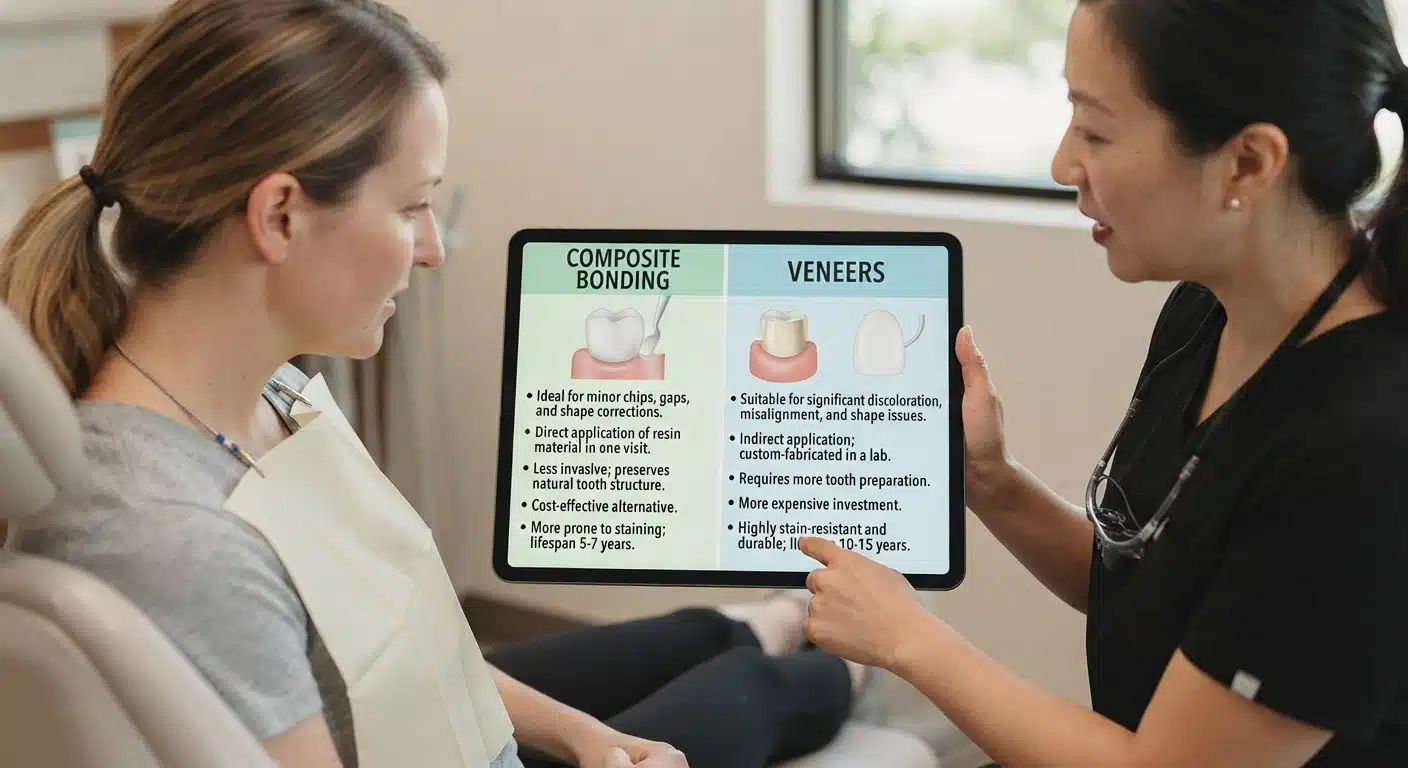
When comparing composite bonding vs veneers, neither option is automatically more suitable for every smile. The right approach depends on the concern being addressed, the condition of your teeth and gums, the amount of enamel available, your bite, oral habits and your aesthetic goals.
Composite bonding may be considered for selected concerns such as small chips, minor shape changes or certain small gaps. Veneers can be another option for selected cosmetic concerns, with porcelain and composite veneers offering different approaches to treatment. The amount of tooth preparation, expected maintenance and repair options can also differ.
If you are exploring dental veneers in JLT, a personalised assessment can help determine whether veneers, composite bonding or another treatment sequence should be discussed. A cosmetic consultation should consider the health and function of your teeth as well as the appearance you would like to achieve.
Quick Comparison Table
| Consideration | Composite Bonding | Veneers |
| Material | Tooth-coloured composite resin is applied and shaped directly on the tooth | A veneer is a thin restorative covering designed to change the visible front surface of a tooth |
| Treatment approach | Often used to add, reshape or restore selected areas | May be planned to change the appearance of one or more visible teeth |
| Tooth preparation | The amount of preparation depends on the clinical situation and treatment plan | Preparation requirements vary according to veneer type, tooth position and planned result |
| Appearance planning | The result is shaped directly using composite material | Porcelain veneers are generally laboratory-made, while composite veneers may be created directly or indirectly depending on the approach |
| Repair considerations | Selected chips or damage may sometimes be repaired or modified | Repair and replacement options depend on the veneer material, extent and type of damage |
| Stain behaviour | Composite may change in appearance or pick up staining over time | Different veneer materials have different surface and maintenance characteristics |
| Suitability | May be considered for selected smaller cosmetic changes | May be considered for selected changes involving shape, colour or overall appearance |
| Maintenance | Requires ongoing oral hygiene and professional monitoring | Requires ongoing oral hygiene and professional monitoring |
The table provides a broad comparison rather than a treatment recommendation. Individual teeth can have different needs, and the same cosmetic concern may have more than one possible treatment approach.
A dentist will assess whether the proposed change is appropriate for the tooth, surrounding gum tissue and bite before recommending a cosmetic procedure.
What Composite Bonding Is
Composite bonding is a cosmetic and restorative technique that uses tooth-coloured composite resin.
The material can be applied directly to selected areas of a tooth and shaped to alter or restore its appearance. Depending on the clinical situation, composite bonding may be discussed for concerns such as:
- Small chips
- Minor irregularities in tooth shape
- Uneven edges
- Selected small gaps
- Minor cosmetic changes to the visible tooth surface
Composite bonding is not limited to one particular type of cosmetic concern. However, it may not be suitable for every degree of colour change, tooth position problem or structural concern.
The amount of composite required and the way it is shaped depend on the tooth and the treatment objective. A dentist may also consider whether the tooth has existing restorations, signs of wear, cracks or other conditions that could affect the proposed treatment.
Composite bonding should therefore be planned around the existing tooth structure rather than simply applied to create a particular shape from a photograph or cosmetic trend.
What Porcelain and Composite Veneers Are
A veneer is a thin restorative covering designed to change the appearance of the visible surface of a tooth. Veneers may be made from different materials, including porcelain and composite resin.
Porcelain veneers
Porcelain veneers are typically designed as indirect restorations. They are fabricated outside the mouth before being fitted to the prepared tooth according to the treatment plan.
Porcelain can be selected for certain aesthetic treatment objectives, but the suitability of a porcelain veneer depends on the tooth, the bite, the amount of tooth structure and other clinical factors. The level of tooth preparation required can vary.
Composite veneers
Composite veneers use composite resin to alter the visible appearance of the tooth. Depending on the clinical approach, the material may be applied and shaped directly or may be used as part of another restorative technique.
The term composite veneer should not automatically be treated as identical to every type of composite bonding. The treatment may involve a different scope, with composite material covering a larger visible portion of the tooth rather than being applied only to a small area.
Your dentist can explain the difference between localised composite bonding and a composite veneer approach based on what is being planned for your individual teeth.
Tooth Preparation and Reversibility Considerations
Tooth preparation is one of the most important differences to discuss before cosmetic treatment. The amount of tooth preparation required for composite bonding or veneers is not the same in every case.
Composite bonding
Some bonding procedures may involve little or no removal of healthy tooth structure, depending on the clinical objective and how the composite needs to be positioned.
However, this should not be interpreted as a guarantee that no preparation is required. The tooth may need to be cleaned, shaped or otherwise prepared to achieve an appropriate result.
Veneers
Veneer treatment may involve preparation of the tooth structure. The extent depends on factors including:
- The type of veneer
- The starting shape and position of the tooth
- The thickness of the planned restoration
- The desired change in appearance
- The condition of the tooth
- The bite and functional forces
Because tooth preparation can involve the removal or alteration of tooth structure, veneers should not generally be described as universally reversible.
Before proceeding, patients should understand what changes to the tooth are being proposed and what future maintenance or replacement considerations may apply. A dentist should explain the treatment plan clearly, including the nature of any planned tooth preparation.
Appearance, Stain Behaviour, Repair and Maintenance
Cosmetic appearance is an important consideration, but it is not the only one. Composite and veneer materials can behave differently over time.
Appearance
The appearance of a cosmetic restoration depends on several factors, including:
- The material selected
- The natural colour and structure of the underlying tooth
- The shape and position of the tooth
- The surrounding teeth
- The condition of the gums
- The quality and condition of the restoration over time
A natural-looking result should be planned in relation to the person’s existing smile rather than based on a single standard shade or tooth shape.
Stain behaviour
Composite resin may be more prone to changes in surface appearance or staining over time compared with some other restorative materials.
However, the way a restoration changes can depend on oral hygiene, dietary habits, exposure to staining substances and the condition of the restoration. Patients should not assume that any cosmetic material will remain unchanged indefinitely.
Repair
One practical difference between treatment approaches may be how selected damage can be managed. In some situations, a composite restoration may be modified or repaired.
Veneer repair options depend on the material, location and extent of damage. In some situations, replacement may be considered. The appropriate response to a damaged restoration depends on an individual clinical assessment.
Maintenance
Both composite bonding and veneers require ongoing care. Good oral hygiene, routine dental assessment and attention to habits that may damage teeth or restorations are important.
Cosmetic treatment does not remove the possibility of tooth decay, gum disease, damage or other dental problems.
Concerns Each Option May and May Not Address
Composite bonding and veneers may both be discussed for cosmetic concerns, but the scope of treatment can differ.
Composite bonding may be discussed for selected concerns such as:
- Small chips
- Minor shape corrections
- Selected edge changes
- Certain small gaps
- Localised cosmetic changes
Veneers may be discussed for selected concerns involving:
- Changes to visible tooth shape
- Selected colour concerns
- Surface irregularities
- Aesthetic changes involving one or more visible teeth
However, neither option automatically corrects every cosmetic concern. For example, significant tooth-position problems may require orthodontic assessment.
Major structural damage may require a different restorative approach. Active tooth decay or gum disease should be assessed and managed before elective cosmetic treatment is planned. The best option depends on what is causing the visible concern, not simply on which treatment appears more attractive online.
For patients whose cosmetic goals involve several teeth or more than one type of treatment, broader smile makeover planning may be discussed.
Why Gum Health, Enamel, Bite and Habits Matter
Cosmetic treatment should be planned in the context of overall oral health.
Gum health
The gums frame the visible teeth. Inflammation, gum disease or other gum-health concerns may affect both treatment planning and the appearance of the final result. A dentist may recommend addressing oral-health concerns before proceeding with elective cosmetic treatment.
Enamel and tooth structure
The condition and amount of healthy tooth structure can affect whether bonding or veneers may be considered. Existing restorations, cracks, wear and other structural concerns can also influence the treatment plan.
Bite
The forces placed on the front teeth can be relevant to cosmetic restorations. A patient who places significant pressure on certain teeth may require additional planning to reduce the risk of damage. Your dentist may assess your bite before recommending a cosmetic approach.
Habits
Habits such as biting hard objects or using teeth for non-food purposes can damage natural teeth and restorations.
Other habits may also affect the way cosmetic treatment is planned. Being open about relevant habits allows the dentist to consider them as part of the treatment discussion.
When Alignment or Whitening May Be Discussed First
Sometimes bonding or veneers may not be the first step in a cosmetic treatment plan.
When alignment is a concern
If the primary concern is tooth position, spacing or alignment, orthodontic treatment may be discussed before changing tooth shape with restorative material. For selected patients, Invisalign in Dubai may be one of the orthodontic options considered.
Straightening teeth before cosmetic restorations can sometimes change the amount or type of restorative treatment required. However, the appropriate sequence depends on the individual case.
Your dentist or orthodontist will assess whether alignment should be addressed before cosmetic treatment.
When colour is the main concern
If the primary concern is tooth colour, whitening may be discussed before changing the shape or surface of teeth. Professional teeth whitening may be considered for selected patients after an appropriate dental assessment.
Whitening does not change the colour of every existing restoration in the same way as natural tooth structure. This can be relevant when planning bonding or veneers. The sequence of whitening and restorative treatment should therefore be discussed before the final shade of a cosmetic restoration is selected.
Frequently Asked Questions
- Is composite bonding the same as composite veneers?
Not always. Composite bonding may involve applying composite resin to a selected area of a tooth, while a composite veneer approach may involve changing a larger visible portion of the tooth surface. The terminology and treatment scope can vary, so your dentist should explain exactly what is being proposed for your teeth.
- Which requires more tooth preparation: bonding or porcelain veneers?
The amount of tooth preparation depends on the individual treatment plan. Some composite bonding procedures may involve little or no removal of healthy tooth structure, while porcelain veneer treatment may require preparation depending on the tooth position, veneer design and planned result. Your dentist should explain the proposed level of preparation before treatment.
- Can composite bonding stain or chip?
Composite resin can change in appearance over time and may pick up staining or become damaged. The likelihood and type of change depend on factors such as oral hygiene, diet, habits, bite forces and the condition of the restoration. A dentist can assess whether polishing, repair, replacement or another approach may be appropriate if a problem develops.
- Can bonding be changed to veneers later?
In some cases, a patient who has composite bonding may later discuss veneers. However, whether this is appropriate depends on the condition of the tooth, the existing composite, the amount of natural tooth structure and the proposed future treatment. A new assessment is needed before deciding on a change in treatment.
- How do I know whether bonding or veneers is suitable for me?
A dentist will assess your teeth, gums, enamel, bite, existing restorations and cosmetic goals. The most suitable option depends on the type and extent of the concern being addressed. In some cases, another treatment or a different treatment sequence may be more appropriate.
Cosmetic Consultation in JLT Dubai
Choosing between composite bonding and veneers is not simply a question of which option looks better. The most appropriate approach depends on the condition of your teeth, the health of your gums, your enamel, bite, existing dental work and the type of aesthetic change you would like to discuss.
If you are comparing composite bonding and veneers, a personalised consultation can help clarify which options may be appropriate for your teeth and whether alignment, whitening, gum care or another stage should be considered first. You can meet Dr. Udita and our team before arranging a consultation. Your dentist will assess your individual clinical situation and aesthetic goals before discussing a suitable treatment plan.
