
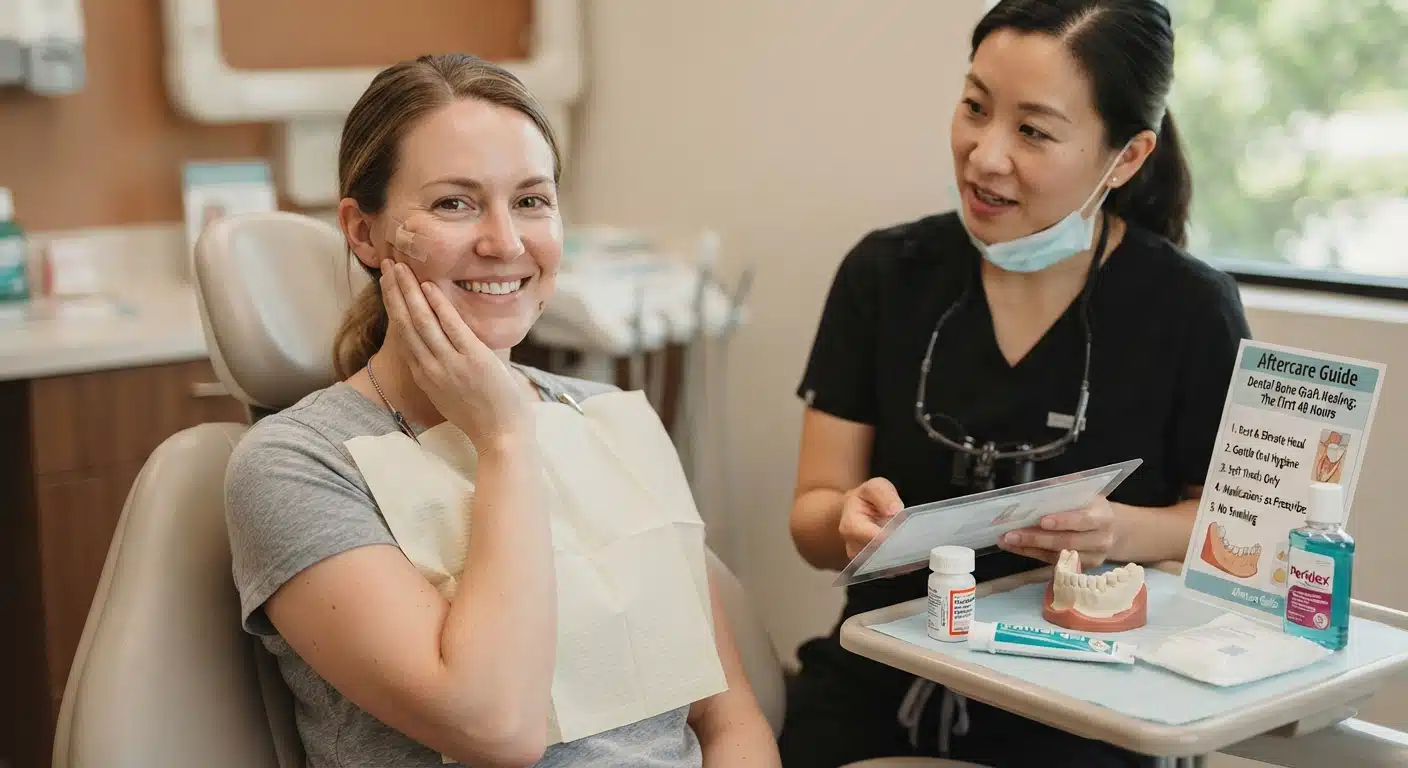
Dental bone graft recovery involves more than waiting for the gum to feel comfortable again. The soft tissues may begin recovering before the grafted area has completed the longer process of bone healing and maturation.
The overall recovery process can vary depending on the location and extent of the graft, the materials and techniques used, your general health and the reason the graft was performed.
For patients preparing for future dental implants in JLT, a bone graft may be one stage of a wider treatment plan. However, not every implant patient needs grafting, and not every graft follows the same recovery sequence.
Your treating clinician should provide specific post-procedure instructions based on your surgery. The information below explains general recovery principles and warning signs, but it does not replace the individual instructions given by your oral surgeon or implant clinician.
What Recovery Means After a Dental Bone Graft
A dental bone graft is used to support or rebuild bone in an area where additional bone volume may be required for future treatment or to support the surrounding structures. Recovery involves several processes that may overlap.
Immediately after the procedure, the body begins the normal healing response associated with surgery. The soft tissues around the surgical site then continue to recover. At the same time, the grafted area undergoes a longer biological process in which the graft material and surrounding tissues are involved in bone healing and remodelling.
This is why feeling better does not necessarily mean that the grafted area has completed the healing process required for the next stage of treatment. For some patients, the graft may be part of planning for an implant. For others, grafting may be performed for a different clinical reason.
The expected recovery and treatment sequence depend on:
- The location of the graft
- The amount of bone support required
- The type of grafting approach used
- Whether grafting was performed alone or alongside another procedure
- The condition of the surrounding tissues
- Individual healing factors
- The clinical objectives of future treatment
Your oral surgeon will assess the site and explain what recovery and follow-up may involve in your particular case.
The First Day and First Few Days: What May Be Expected
The early period after oral surgery is usually focused on protecting the surgical site and following the instructions provided by the treating clinician.
Some patients may experience temporary symptoms after a dental bone graft, which can include:
- Swelling
- Tenderness or discomfort around the surgical area
- Minor bleeding or oozing during the early post-procedure period
- Bruising
- Temporary changes in eating comfort
In the first few days, be careful around the graft spot. Keep the nearby skin and tissues from getting extra poking or rubbing.
Soft-Tissue Healing Versus Bone Maturation
Soft-tissue healing
The gums and other soft tissues around the surgical area may gradually recover as the surgical site heals. The appearance and comfort of the gum tissue may improve before the underlying bone has completed its longer healing process.
This is one reason an external visual check cannot determine whether a bone graft is ready for an implant or another procedure.
Bone maturation
The grafted area may require additional time for biological healing and remodelling. The exact process depends on the grafting approach, graft material, location and individual clinical circumstances.
Your oral surgeon may assess healing through clinical examination and, where appropriate, imaging. The timing of any future implant procedure should therefore be based on an individual assessment rather than on the number of days or weeks that have passed since the graft.
A patient should not assume that the graft is ready for the next stage simply because swelling has resolved or the gums appear healed.
General Eating, Cleaning and Activity Guidance
Aftercare should always follow the specific instructions given by the clinician who performed the procedure. However, several general principles are commonly important after oral surgery.
Eating after a dental bone graft
The appropriate food choices can depend on the location of the graft and the procedure performed. Your clinician may provide guidance about food texture and when to return to your usual diet.
During the early recovery period, avoid placing unnecessary pressure on the surgical area and follow any instructions about chewing. Do not test the graft site by biting firmly on the area. If you are unsure whether a particular food is appropriate, contact your treating clinic rather than relying on general advice online.
Cleaning the mouth
Good oral hygiene remains important, but the surgical site may require a modified approach during the early healing period.
Your clinician may give specific instructions about:
- When and how to brush near the surgical area
- Whether to avoid direct contact with the graft site for a period of time
- How to rinse or clean the mouth
- Which areas can be cleaned normally
- How to care for sutures if present
Do not scrub or repeatedly touch the surgical site to check whether it is healing.
Physical activity
The appropriate return to exercise and strenuous activity depends on the extent of surgery and your individual circumstances.
Your treating clinician may provide specific restrictions or guidance. If activity appears to increase bleeding, discomfort or swelling, contact the clinic for individual advice.
Protecting the graft site and following prescribed instructions
Protecting the surgical area is an important part of recovery. Your oral surgeon may provide instructions specific to the type and location of the graft. These may include guidance about eating, cleaning, physical activity and caring for the surgical area.
Follow the prescribed instructions exactly as they are given.
Do not:
- Touch or press repeatedly on the graft site
- Attempt to remove material from the surgical area
- Use sharp objects to inspect the site
- Modify or stop prescribed treatment without discussing it with the clinician
- Assume that instructions from another person’s procedure apply to your own surgery
Smoking and other forms of tobacco exposure can be relevant to surgical healing and should be discussed openly with the treating clinician.
If you have questions about a prescribed medicine or post-operative instruction, contact the clinician who provided it rather than making changes independently.
Follow-Up Appointments and How Healing Is Assessed
Follow-up appointments allow the treating clinician to assess how the surgical site is recovering. The number and timing of follow-up visits depend on the procedure and the individual’s clinical needs.
During follow-up, the clinician may assess factors such as:
- The condition of the soft tissues
- The stability and appearance of the surgical area
- Signs of inflammation or other complications
- Healing progress relevant to the treatment plan
- Whether additional assessment or imaging is appropriate
The presence of a scheduled follow-up appointment does not mean you should wait until that date if you develop concerning symptoms. Contact the clinic promptly if you experience a problem that requires earlier advice.
For patients undergoing procedures as part of a broader treatment plan, oral surgery in JLT may involve coordinated follow-up with other stages of dental care.
Warning Signs: When to Contact the Treating Clinic Promptly
A dental bone graft should be monitored according to the instructions provided by the treating clinician.
Contact the clinic promptly if you experience symptoms such as:
- Severe or worsening pain
- Swelling that is increasing or causing significant concern
- Persistent or heavy bleeding
- A high temperature or feeling significantly unwell
- Pus, unusual discharge or a persistent unpleasant taste associated with the surgical area
- A significant change in the appearance of the surgical site
- A sensation that material from the graft has moved or become displaced
- A dental injury affecting the surgical area
If you have difficulty breathing or swallowing, significant facial trauma or another potentially serious medical emergency, seek emergency medical care rather than waiting for a routine dental appointment.
Factors That Can Affect Healing and Implant Timing
The recovery process and timing of future treatment can vary significantly. Factors that may affect healing include:
The location and extent of grafting
A small graft in one area may have different healing considerations from a more extensive grafting procedure or sinus-related augmentation.
The grafting technique and materials
Different clinical approaches may be selected for different treatment objectives. The specific graft material and surgical technique can influence how the clinician plans follow-up and the next stage of treatment.
Whether other procedures were performed
A graft may sometimes be performed as part of a wider surgical procedure. Whether another procedure is performed at the same time can affect the treatment sequence and aftercare requirements.
The condition of the surrounding tissues
Healthy surrounding teeth, gums and oral tissues can be important considerations in treatment planning. Existing oral-health concerns may need to be managed as part of the wider care plan.
Individual healing factors
General health, medical history and lifestyle factors can influence surgical planning and healing. The treating clinician should consider these factors when discussing expectations and the timing of future treatment.
Implant treatment planning
For patients having a bone graft in preparation for a dental implant, the decision about when to proceed should be based on clinical assessment. An implant should not be scheduled solely according to a generic recovery timeline found online.
Your oral surgeon or implant clinician may assess the grafted area and determine whether further healing, imaging or planning is needed before the next stage.
Frequently Asked Questions
- How long does recovery take after a dental bone graft?
Healing is not one single step. It can include early repair of soft tissues. It can also take longer for bone to heal, then mature. How long it takes depends on several things. The graft site matters,its procedure, or the graft method. Your own healing pattern also affects the timeline. Your oral surgeon will guide you through this. They can check the grafted area and tell you when it is ready for the next part of care.
- When can I eat normally after a bone graft?
It depends on the graft spot and on the steps your surgeon used. Your oral surgeon should go over what foods are safe for you, and how to chew during recovery. If you got written instructions, save them. If someone walked you through the plan, follow what they said. Do not rush back to your normal diet just because you read a general schedule that says you can.
- Is swelling normal after a dental bone graft?
Some swelling may occur after oral surgery, including bone grafting. The amount and pattern can vary between patients and procedures. However, swelling that is severe, increasing or otherwise concerning should be discussed promptly with the treating clinic.
- How do I know whether a bone graft is healing properly?
The gums are only one part of the exam. You also need to make sure the grafted bone healed the way it should. Your clinician will check the spot in person. In some cases, they may use an imaging test and take photos, too, to see it clearly. Be sure to come to your follow up visits at the scheduled times. If you notice anything that feels off or you develop symptoms that worry you, call the clinic right away.
- When can a dental implant be placed after bone grafting?
The timing depends on the grafting procedure, the condition of the grafted area, the treatment plan and individual healing. In some situations, grafting and implant placement may be planned together, while in others additional healing and assessment may be required before an implant is considered. Your implant clinician will determine the appropriate sequence for your case.
Follow-Up Care in JLT Dubai
Dental bone graft recovery is individual. Early improvement in swelling or gum comfort does not necessarily indicate that the underlying bone has completed the healing and maturation required for the next stage of treatment. Patients can meet the Dental Oasis dental team when considering implant and oral-surgery care.
If you are preparing for a bone graft, recovering after a procedure or planning a future implant, your treating clinician can assess your individual surgical site and explain the appropriate next stage of care. If you develop a warning sign or have concerns about your recovery, contact the clinic for personalised clinical advice or to arrange appropriate follow-up.
