
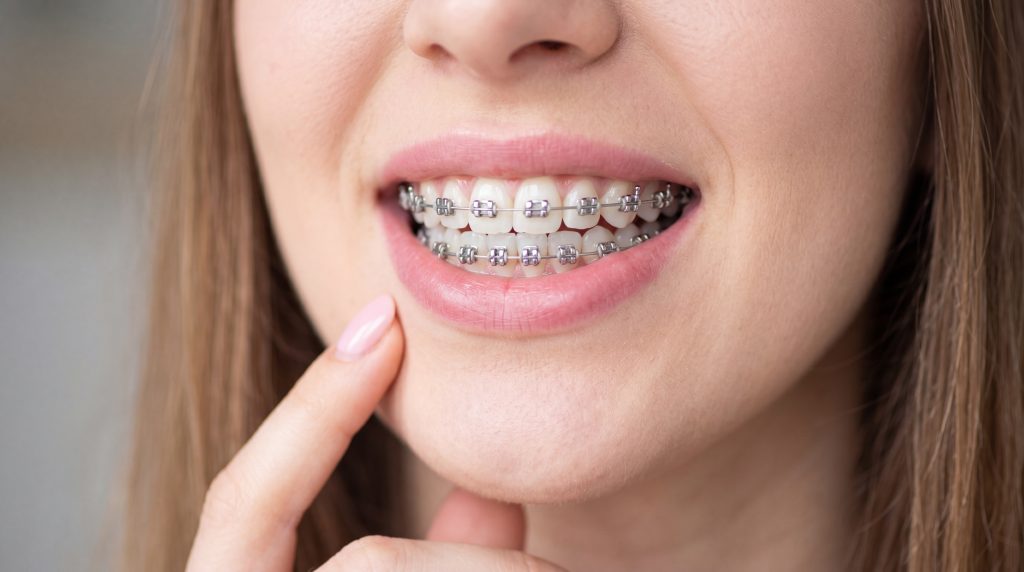
You look in the mirror and there it is. One tooth, slightly turned or pushed forward, throwing off an otherwise decent smile. Everything else looks fine. Just that one tooth.
So naturally you wonder. Can’t they just fix that one tooth? Why would I need a full mouth of brackets and wires for one small problem?
It’s a fair question. And the answer is more complicated than a simple yes or no.
Can You Actually Get Single Braces for Teeth?
Technically, yes. Partial braces exist. Orthodontists can place brackets on just the tooth or teeth that need to move, rather than wiring up your entire mouth.
This is sometimes called partial treatment, or in certain cases, single-arch treatment when it involves one full row rather than one tooth.
But here’s the catch. Just because it’s possible doesn’t mean it’s always the right call. Your teeth don’t work in isolation. They work together. Move one and you can end up shifting the way your whole bite comes together.
Why It’s Not Always as Simple as Fixing One Tooth
Your upper and lower teeth are designed to meet a certain way. Dentists call this your bite alignment. It affects how you chew. It affects how you speak. It affects how much pressure gets distributed across your teeth when you eat.
If you move just one tooth without considering how it interacts with the teeth around it, you can accidentally create a new problem. The tooth might look straighter, but your bite might not close properly anymore.
This is the main reason orthodontists don’t jump straight to single braces for teeth without a full assessment first.
Here’s what your orthodontist actually checks before recommending single-tooth treatment:
- Whether your bite is already properly aligned
- Whether moving one tooth affects how your upper and lower teeth meet
- Whether the surrounding teeth are stable enough to support isolated movement
- Whether the misalignment is purely cosmetic or linked to a bigger structural issue
- Whether age or previous orthodontic history affects the outcome
When Single Braces for Teeth Actually Make Sense
There are real situations where treating just one tooth works fine.
- A small gap between front teeth. If your bite is otherwise healthy and you just want to close a gap, this is often treatable in isolation.
- A tooth that shifted after previous braces. Some people had braces years ago and one tooth slowly drifted back out of place. If the rest of your alignment held, correcting just that tooth is usually straightforward.
- Minor rotation with a stable bite. If one tooth is slightly turned but everything else meets correctly, targeted treatment can work without disrupting anything else.
In these cases, your orthodontist has more flexibility, because the risk to your overall bite is low.
When You’ll Likely Need More Than Just One Tooth Treated
Some situations genuinely require broader treatment, even if only one tooth looks obviously crooked.
| Situation | Why Single Braces Usually Aren’t Enough |
| Existing overbite or underbite | Moving one tooth can worsen how the jaws meet |
| Crowding affecting several teeth | Neighboring teeth need space adjustments too |
| Tooth misalignment linked to jaw growth | Requires broader correction, not isolated movement |
| Uneven bite pressure across the mouth | Fixing one tooth can shift pressure elsewhere |
| Previous orthodontic relapse across multiple teeth | Often more than one tooth has actually moved |
If any of these apply, your orthodontist will likely recommend either full braces, both arches with limited brackets, or clear aligners that address more of your mouth even if the visible problem seems small.
What Your First Consultation Actually Involves
This is the part people skip when they’re trying to guess the answer themselves. An actual consultation involves more than glancing in your mouth. Your orthodontist looks at your bite from multiple angles, takes X-rays to see your teeth and jaw structure beneath the surface, and checks whether your teeth close together properly when you bite down.
If you’re dealing with one crooked tooth and want a straight answer instead of guessing, book a consultation and get an actual assessment before deciding on treatment.
Alternatives Worth Knowing About
Braces aren’t the only option, even for isolated tooth movement. Clear aligners can sometimes correct a single tooth more discreetly than brackets and wires, which appeals to people who don’t want visible metal for what feels like a small fix.
If you already have a slight bite issue but want a hidden fix regardless of how many teeth need adjustment, lingual braces sit behind your teeth and stay out of sight.
Retainers, in very limited cases, can also nudge a single tooth back into place if the movement needed is minor. This depends entirely on your specific situation.
The Honest Answer
There’s no universal yes or no here. Some people genuinely only need one tooth treated. Others assume it’s a small fix and find out during their consultation that the issue is more connected to their bite than they realized.
Treatment suitability always comes down to a proper orthodontic assessment. Guessing based on what you see in the mirror only tells part of the story. What’s happening with your bite and jaw structure underneath is the part that actually determines your options.
Key Takeaways
- Single braces for teeth are possible, but they only work when your bite is already properly aligned.
- Moving one tooth without considering the rest of your mouth can create new bite problems.
- A proper consultation, including X-rays and a bite assessment, is the only reliable way to know if you’re a candidate.
FAQ
Q: Can I get braces on just one tooth?
A: Yes, in some cases. If your bite is otherwise healthy and only one tooth is misaligned, targeted treatment is often possible. An orthodontist needs to confirm this through an assessment first.
Q: Will fixing one tooth affect my bite?
A: It can. Teeth work together to create a functional bite, so moving one tooth without checking how it interacts with the rest of your mouth can throw off how your teeth meet when you chew.
Q: How long does treatment take for just one crooked tooth?
A: Isolated cases are often much faster than full treatment, sometimes just a few months, depending on how much movement is needed and whether your bite allows for it.
