
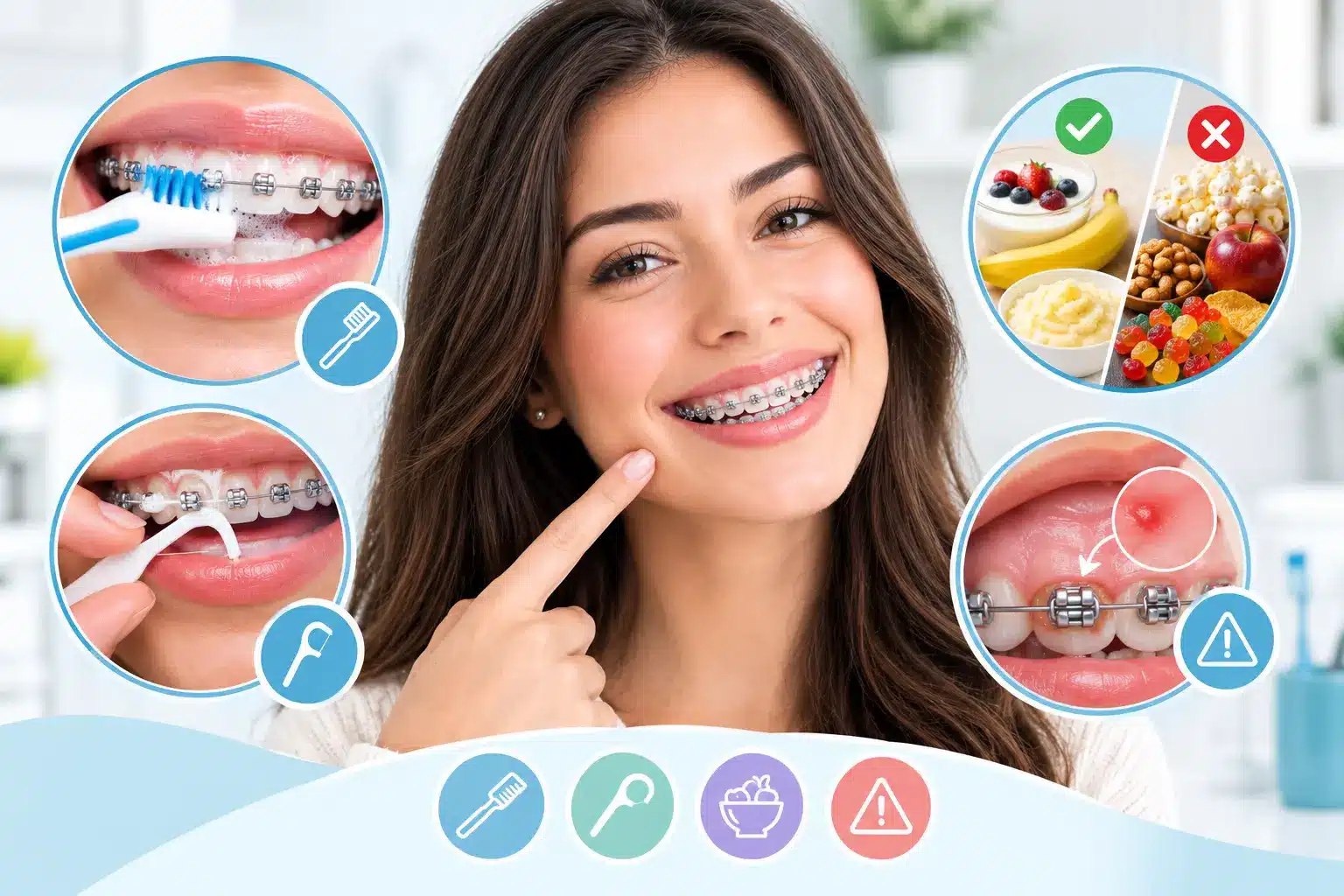
Knowing how to clean self-ligating braces is an important part of looking after your teeth and gums during orthodontic treatment. Although self-ligating brackets have a built-in mechanism that holds the archwire, they are still fixed appliances with brackets and wires around which plaque and food debris can collect.
A solid daily routine starts with brushing every day. Use a gentle hand around the brackets and be sure to brush right along the gumline. Next, clean between the teeth. Choose the small tools that fit what you need.
How you set up the routine can vary. It depends on your oral health. It also depends on how your gums look. Your orthodontic appliance matters too.
If you are wearing self-ligating braces in Dubai, or you are about to begin treatment, ask your orthodontist and dental team for cleaning steps that fit you. The notes below may match what many people hear during fixed-braces care, but they are not a substitute for advice from your clinic.
Why Plaque Can Collect Around Any Fixed Bracket
Braces create new nooks around the teeth. Brackets and wires can get in the way of brushing, so some areas do not get reached as easily. Food may wedge near the edges of the brackets. Plaque can also collect close to the gumline, most of all when you skip those spots.
Areas that may require particular attention include:
- Along the gumline
- Above and below each bracket
- Around the edges of the bracket
- Between neighbouring teeth
- Around areas where food tends to collect
- The chewing surfaces and back teeth
The goal is not simply to brush for a set amount of time. It is to clean each area thoroughly using a technique and routine appropriate for your teeth and orthodontic appliance. Your dentist or orthodontist can demonstrate the technique that is most suitable for you.
A Step-By-Step Daily Cleaning Routine
Step 1: Look for trapped food
Look around before you start brushing. Make sure there is no food stuck near the brackets, the wires, or in the spaces between teeth.
After meals, you can rinse with water first. This can wash away bits that are loose, especially if you cannot brush right away. If you find stuck food, do not pick at it with sharp tools. That can harm the braces or cut your gums.
Step 2: Brush the gumline
Place the toothbrush in the right position, so the bristles reach the gumline. The gumline is where plaque tends to build up, especially if you brush too fast. Keep the pressure light. Use steady strokes instead of pushing hard into the gums.
Step 3: Clean above and below the brackets
Next, clean around the braces. Tilt the brush to reach just above each bracket and also just below it. Move around the mouth in order. Do not only scrub the front teeth you can easily see. Spend a bit more time near the back teeth too, since those spots can be harder to clean.
Step 4: Clean the chewing and inner surfaces
The outside surfaces are not the only areas that require attention. Brush the chewing surfaces and the inside surfaces of the teeth as part of your usual oral hygiene routine.
Step 5: Check the appliance
After cleaning, briefly look at the brackets and wires. If something appears broken, loose or significantly out of position, do not attempt to repair the appliance yourself. Contact your orthodontic team for advice.
Interdental Brushes, Floss Aids and Other Tools to Discuss with Your Dentist
Cleaning between the teeth can require additional attention when wearing fixed braces. Several tools may be discussed during orthodontic treatment.
Interdental brushes
Interdental brushes remove plaque in the tiny spaces between teeth. If you plan to use one, check with your dental professional first. They will tell you if it is likely to work well for your mouth. They can also guide you to the correct size and explain how to use it proeprly.
Flossing aids
Flossing behind wires on fixed braces can feel tougher than flossing without an appliance. Some people use special tools made to help the floss slide around the wire. The best option depends on a few factors, such as the space between your teeth, how the braces are positioned, and what you need to do to keep your mouth clean.
Electric toothbrushes
Some patients use an electric toothbrush with braces, but they have to be careful. They should follow what the maker says and what their dental professional advises.
With an electric brush, move it in a steady way over teeth and brackets. Do not push it hard into the appliance. Also, an electric brush does not guarantee every spot gets cleaned well. Your method and doing it the same way each time still matter a lot.
Other oral-hygiene products
Your dentist may recommend specific oral-care products depending on your individual risk of tooth decay or gum problems.
This article does not replace personalised product recommendations. Ask your orthodontist or dentist before adding new products to your routine if you are unsure what is appropriate for your situation.
Foods and Habits That Can Damage Brackets or Trap Debris
Fixed braces require some practical changes to eating habits. Certain foods or eating habits may increase the chance of damaging a bracket, wire or other orthodontic component. Sticky foods can also remain around brackets and be difficult to remove.
Foods and habits to discuss with your orthodontic team include:
- Very hard foods
- Sticky or chewy foods
- Foods that are difficult to bite directly into
- Chewing ice
- Biting hard objects that are not food
Your orthodontist may provide more specific instructions depending on your appliance and treatment plan.
It is also important to avoid habits such as:
- Biting pens or pencils
- Pulling at brackets with your fingers
- Attempting to adjust wires yourself
- Using sharp objects to remove food
- Chewing on hard non-food items
A damaged appliance may require assessment and repair, which can interrupt planned orthodontic treatment.
Eating and Cleaning During Work or School in Dubai
Handling braces on a hectic day takes a bit of planning. If you are at school, in university, or at work in Dubai, it can help to carry a small oral-care kit. What you pack can change based on what you need. You might include:
- A toothbrush
- Toothpaste
- A suitable interdental cleaning aid recommended by your dental professional
- Water for rinsing
If you cannot brush right away after eating, try rinsing your mouth with water. Check for any bits of food you can see. Do this until you can do your usual cleaning. If you eat out, pick foods that fit with your orthodontic appliance. Follow the exact tips your orthodontist gave you.
What To Do If a Bracket, Door or Wire Feels Loose
Self-ligating brackets have a small internal piece that acts like a tiny door. It holds the archwire in place, so the wire should not slip out.
If you think that latch is not sitting right, or if the archwire feels off, painful, or not secure, contact your orthodontist right away. Tell them what you feel and what you see. Then ask how you should handle it.
Do not attempt to:
- Glue a bracket back into place
- Force a bracket door closed
- Pull or bend a wire into position
- Cut the wire yourself
- Use household glue or adhesive on the appliance
Contact your doctor for the immediate next step, if you notice a problem.
Symptoms That Need Prompt Clinical Advice
Not every feeling you get during braces means something is wrong. Still, if you notice certain changes, it is smart to talk to a dental professional sooner rather than later. Reach out to your orthodontist or dentist for guidance if you are worried about any of the following:
- Significant or worsening swelling
- Persistent bleeding from the gums that concerns you
- A dental injury
- A loose appliance causing significant irritation
- A wire or component causing a notable injury to soft tissues
- Severe or unusual pain
- Signs of possible infection
- Any sudden change that you are concerned about
How fast you need help can depend on what you are feeling and what fits your situation. If you think you may have a medical or dental emergency, do not wait for a regular orthodontic visit. Go get the right urgent care instead.
Frequently Asked Questions
- Are self-ligating braces easier to clean than traditional braces?
Self-ligating braces work in a slightly different way to hold the archwire. They are still fixed braces, so there are brackets and wires in the mouth. Plaque and bits of food can get stuck around those parts.
How much effort cleaning takes can vary. It depends on how you brush, how your teeth are set, and what your mouth needs. You should not assume these braces are always simple to keep clean for every person.
- Can I use an electric toothbrush with self-ligating braces?
Some people can brush with an electric toothbrush even if they have self-ligating braces on. You should do it with care near the brackets and the wires. Use the instructions that come with your toothbrush. Also follow any steps your dentist or orthodontist gives you. Good brushing habits matter no matter what brush you choose.
- What foods should I avoid with fixed braces?
Your orthodontist might tell you to steer clear of very hard foods, or of foods that are sticky or chewy. If you can, do not bite straight through tough foods with your front teeth. That can add extra strain on your braces. Stick to the exact food advice that matches your treatment.
- What should I do if a bracket door or wire feels loose?
Do not try to handle the appliance on your own. Do not push it so it sits flat, don’t add tape to it, or cut it in any way. Instead, reach out to your orthodontic office. Call them and describe what seems loose or hurt. Even minor shifts count, so be sure to say what you see. Your orthodontic team will guide you. They will also explain what you can do right away and what you should avoid. Wait for their directions until your appointment.
- How often should I have professional cleaning during braces treatment?
Braces do not mean one cleaning routine fits everyone. How you brush and rinse can be different from person to person. It depends on gum health, how much plaque you tend to see, and your risk for future dental problems. Your daily habits matter too, not just the braces. After a dentist looks at your mouth, you can get a plan made for you and your needs.
Follow-Up Care at Dental Oasis JLT
Good oral hygiene during fixed-braces treatment involves more than choosing a particular toothbrush or cleaning tool. The most appropriate routine depends on your teeth, gums, orthodontic appliance and individual oral-health needs.
With self-ligating braces, your orthodontist can show you how to clean near the brackets. They can also suggest ways to floss or clean between teeth. As your teeth shift over time, you may need to adjust your daily routine too.
If you have concerns about cleaning your braces, a loose bracket or wire, or your scheduled orthodontic care, contact Dental Oasis for individual guidance or to arrange an appropriate consultation. An orthodontic assessment can help the team advise you based on your own appliance and clinical situation.
