
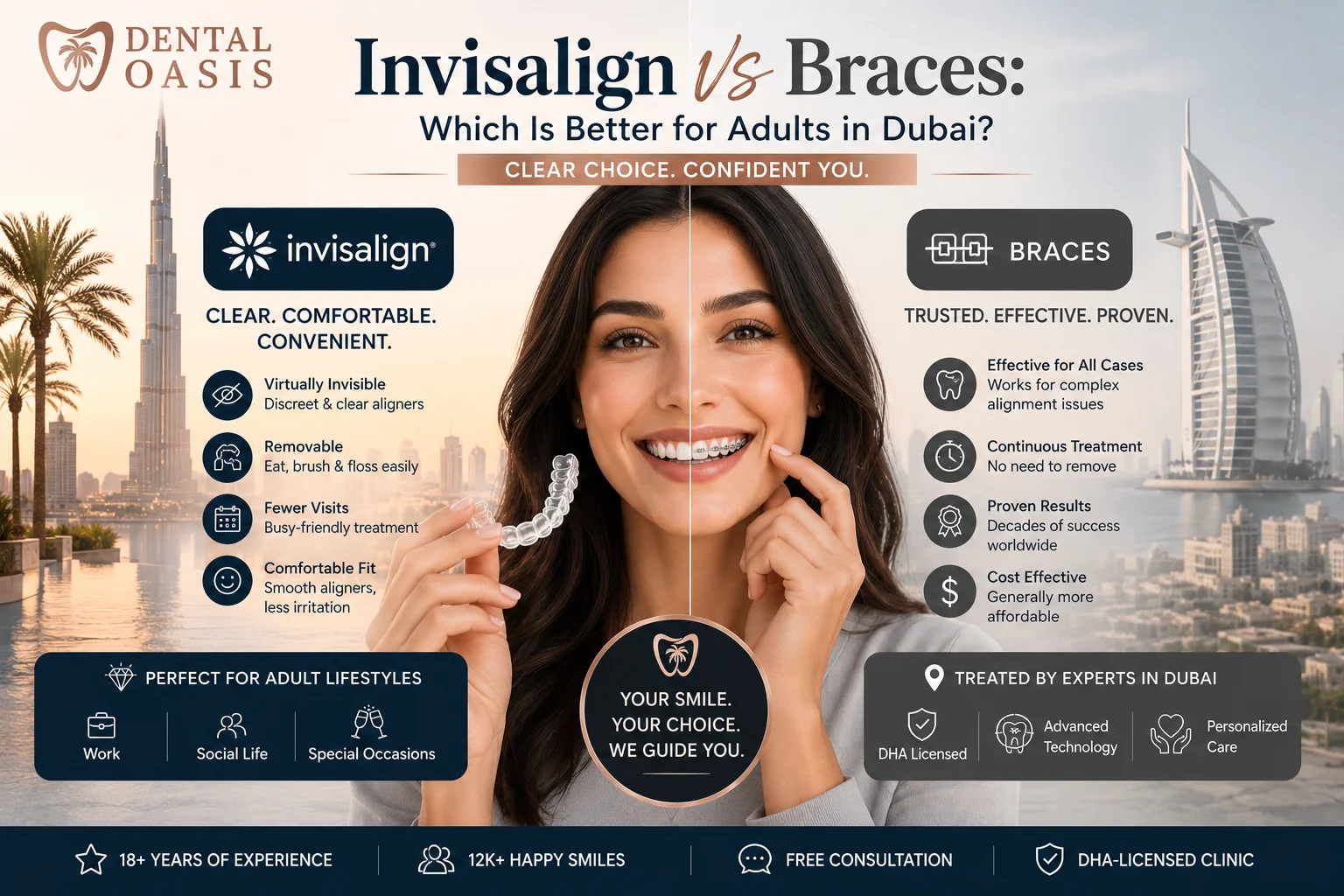
Choosing between Invisalign and braces is one of the most common questions adults ask before starting orthodontic treatment. Both options can straighten teeth, improve smile alignment and help support a healthier bite. The right choice depends on your dental condition, lifestyle, budget, treatment goals and how visible you want your treatment to be.
For adults in Dubai, especially professionals and patients with active social lives, Invisalign treatment is often attractive because it is discreet and removable. Braces, however, remain a reliable option for more complex orthodontic cases and for patients who prefer a fixed appliance.
What Is Invisalign?
Invisalign uses clear, removable aligners that are custom-made for your teeth. Each aligner applies gentle, controlled pressure to move teeth gradually. You wear the aligners in sequence, according to the treatment plan created by your dentist or orthodontist.
The biggest advantage is appearance. Invisalign aligners are transparent and less noticeable than traditional braces, which is why many adults prefer them for work, meetings and social situations.
What Are Braces?
Braces use brackets, wires and sometimes elastic bands to move teeth. They are fixed to your teeth throughout treatment and adjusted during scheduled visits. Braces may be metal, ceramic, self-ligating or lingual, depending on the case and patient preference.
Dental Oasis offers guidance for braces and orthodontic treatment, helping patients compare available options before starting.
Invisalign vs Braces: Appearance
Appearance is a major factor for many adults. Invisalign is more discreet because the aligners are clear. This can be helpful for patients who do not want their orthodontic treatment to be obvious in photos, meetings or daily interactions.
Traditional metal braces are more visible. Ceramic braces are less noticeable, and lingual braces are placed behind the teeth in selected cases, but clear aligners are still one of the most subtle options for many patients.
Invisalign vs Braces: Comfort
Invisalign aligners are smooth and do not use brackets or wires. Some patients find them more comfortable because they cause less rubbing inside the cheeks and lips. Mild pressure is expected when changing aligners.
Braces can also be comfortable once you adjust to them, but brackets and wires may cause temporary irritation. Your orthodontic team can guide you on how to manage this during treatment.
Invisalign vs Braces: Eating and Lifestyle
Invisalign aligners are removed before meals. This means you do not have to avoid foods because of the aligners themselves. You eat normally, clean your teeth and wear your aligners again.
With braces, some sticky, hard or chewy foods may need to be avoided because they can damage brackets or wires. Patients with a very busy lifestyle may prefer the flexibility of removable aligners, but only if they can wear them consistently.
Invisalign vs Braces: Oral Hygiene
Invisalign makes brushing and flossing easier because aligners are removable. You can clean your teeth normally and clean the aligners separately. This can make daily hygiene simpler for many adults.
With braces, food can collect around brackets and wires, so cleaning takes more time. Proper brushing, flossing tools and regular dental visits are important throughout treatment.
Invisalign vs Braces: Treatment Discipline
This is where braces may be better for some patients. Braces are fixed, so they work continuously. Invisalign depends on patient discipline because aligners can be removed. If aligners are not worn as instructed, treatment can take longer or teeth may not move as planned.
Invisalign vs Braces: Case Complexity
Invisalign can treat many mild to moderate alignment concerns, including spacing, crowding and some bite issues. Complex tooth movements, severe crowding or significant bite correction may need braces or a combined approach.
For selected patients, options such as self-ligating braces may be recommended. The best option should always be based on a proper dental and bite assessment.
Cost Factors in Dubai
The cost of Invisalign or braces depends on case complexity, treatment duration, appliance type, scans, follow-up visits, retainers and whether any dental treatment is needed before orthodontics begins. It is better to book a consultation instead of relying on general price estimates online.
Which Option Is Better for Adults?
Invisalign may be better if you want a discreet, removable option and can follow daily wear instructions. Braces may be better if your case is complex, you prefer a fixed appliance, or you may forget to wear removable aligners.
FAQs
Is Invisalign faster than braces?
It depends on the case. Some mild Invisalign cases may be completed faster, while complex cases may need braces or a longer treatment plan.
Can adults get Invisalign?
Yes, many adults choose Invisalign because it is discreet and easier to fit into work and social routines.
Are braces still better than Invisalign?
For complex orthodontic cases, braces may still be more suitable. A dentist or orthodontist should assess your bite before recommending treatment.
How do I choose between Invisalign and braces?
Book an orthodontic consultation. Your teeth, bite, lifestyle and goals need to be assessed before choosing.
Book an orthodontic consultation
Not sure whether Invisalign or braces are right for you? book an orthodontic consultation at Dental Oasis JLT and get a personalized recommendation.
