
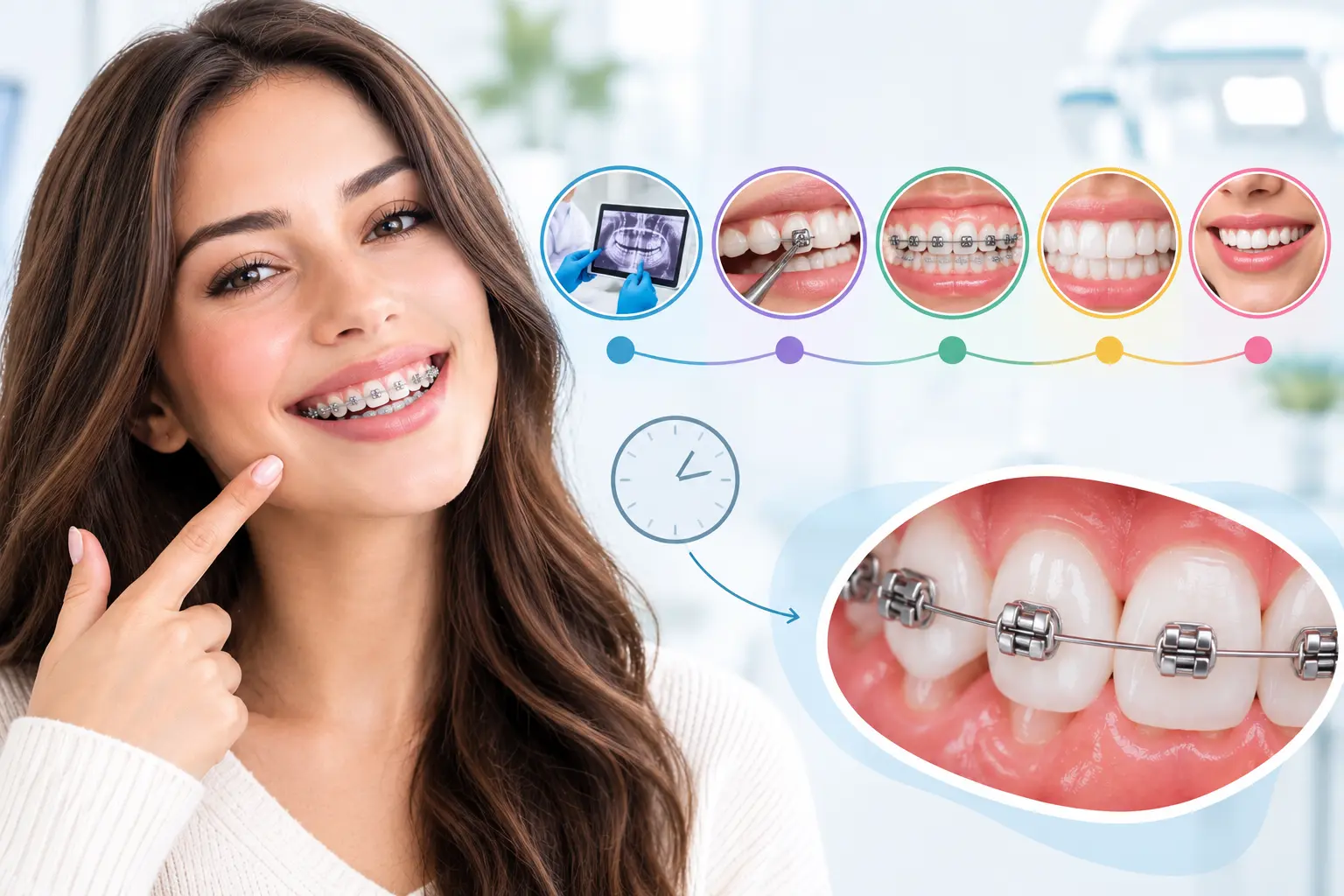
Self-ligating braces treatment time varies from person to person. The total timeline depends on the starting position of the teeth, the bite, the movements required, the treatment plan and how treatment progresses over time. The bracket type alone cannot reliably predict how long orthodontic treatment will take.
If you are considering self-ligating braces, it is more useful to understand the stages of treatment than to rely on a single online duration. Your orthodontist will assess your teeth and bite, develop a treatment plan and explain the expected sequence based on your individual needs.
The journey generally involves assessment and planning, placement of the braces, active tooth movement and monitoring, finishing adjustments, and retention after the braces are removed. Each stage has a different purpose, and the time spent in each stage can vary.
Why Treatment Time Cannot Be Predicted from Bracket Type Alone
Self-ligating braces have a built-in way to keep the archwire in place. Instead of using elastic ties or separate wire ties, the bracket holds the wire with its own parts.
Even so, that does not mean these braces will finish treatment sooner for everyone. Studies have not shown a steady win in total treatment length when self-ligating brackets are compared with conventional systems.
How long care takes can shift a lot. It depends on the starting diagnosis, the specific moves that are planned, the way the braces are used, and how the patient reacts. It also depends on how often visits are needed to check progress and make adjustments.
So two patients can wear the same kind of self-ligating braces and still end up with different timelines.
Factors that can influence the overall treatment process include:
- The degree and type of crowding or spacing
- Individual tooth positions
- The relationship between the upper and lower teeth
- Bite-related treatment objectives
- The type and amount of tooth movement required
- The patient’s stage of dental development
- Oral health during treatment
- Whether additional orthodontic procedures or appliances are required
- Attendance at planned appointments
- Damage to brackets or other orthodontic components
For patients comparing different fixed-brace systems, the bracket type is only one part of treatment planning. Metal braces and other orthodontic approaches may also be considered depending on the individual assessment.
The most accurate treatment estimate should therefore come after a clinical assessment rather than from a general promise based on the type of brackets alone.
Stage 1: Consultation, Records and Treatment Planning
The first stage takes place before braces are fitted. Your orthodontist begins by assessing the teeth, bite and overall orthodontic requirements. The consultation may include a discussion about what concerns you would like to address and what treatment objectives may be appropriate.
Depending on the individual case, diagnostic records and appropriate imaging may be required to support treatment planning.
The purpose of this stage is to understand:
- The starting position of the teeth
- The relationship between the upper and lower teeth
- The type of movements that may be required
- Whether self-ligating braces may be appropriate
- Whether another orthodontic approach should also be discussed
- Any oral-health issues that need attention
- The broad sequence of treatment
Your orthodontist may also discuss the appearance and practical differences between available fixed-brace options. Patients who are exploring different approaches can learn more about orthodontics in JLT before attending a consultation.
This planning stage is important because a realistic treatment timeline cannot be developed until the orthodontic diagnosis and treatment requirements have been assessed.
Stage 2: Bracket Placement and Early Adaptation
Once the treatment plan has been agreed and the patient is ready to begin, the brackets are placed on the teeth and the archwire is engaged.
With self-ligating braces, the brackets use a built-in mechanism to hold the archwire. The early stage of treatment involves adapting to the presence of the braces and beginning the planned orthodontic process.
Patients may need time to become accustomed to:
- The feeling of brackets and wires
- Changes to brushing technique
- Cleaning around the appliance
- Following food guidance provided by the orthodontic team
- Managing the practical aspects of a fixed appliance
Your orthodontist, or the dental team, can show you how to look after your braces. They can also tell you which problems are expected after an adjustment. If you have a problem with a bracket, a wire, or any other part, contact the clinic. Ask them what to do for your case.
Stage 3: Alignment, Bite Correction and Monitoring
The active treatment stage is often the part people think of when they imagine the orthodontic timeline. During this stage, the teeth are guided through planned movements using the orthodontic appliance and treatment mechanics selected for the case.
Depending on the treatment objectives, this stage may involve:
- Improving alignment
- Addressing spacing or crowding
- Guiding individual tooth positions
- Managing aspects of the bite
- Coordinating the relationship between the upper and lower teeth
- Reviewing how the teeth are responding to treatment
However, orthodontic treatment does not necessarily progress through a simple sequence in which one concern is completely finished before another begins. Different tooth movements and treatment objectives may overlap depending on the individual plan. Regular clinical monitoring allows the orthodontist to assess progress and make appropriate adjustments.
The pattern of review appointments cannot be accurately standardised in a general article. Appointment timing depends on the treatment stage, the appliance, the treatment plan and the patient’s clinical needs. Your orthodontist will explain how often you should attend based on your individual treatment.
Self-ligating braces should also not be described as automatically requiring fewer appointments. Although the bracket mechanism changes how the archwire is secured, the overall need for monitoring depends on the clinical plan.
Stage 4: Finishing and Detail Adjustments
As treatment progresses, attention may shift towards the detailed relationship between the teeth. This finishing stage may involve refining:
- Individual tooth positions
- Tooth angulation
- Alignment details
- Spaces between teeth where relevant
- The relationship between the upper and lower teeth
- Other details identified as part of the treatment objectives
Needing some final touch ups does not mean the work has failed. With braces or aligners, the body reacts over time, and the teeth shift slowly. In the last phase, a careful check and small changes are often needed. Also, you should not expect things to stop the moment the teeth look straight in a mirror.
Visible alignment is only one part of orthodontic planning. The orthodontist may also assess the bite, tooth positions and other treatment objectives before deciding that active treatment is ready to finish. The amount of time required for final adjustments depends on the individual case.
Stage 5: Removal and Retention
When the orthodontist determines that the objectives of active treatment have been reached, the braces can be removed and the retention stage begins. Retention is not an optional afterthought.
After orthodontic tooth movement, retainers are used as part of the plan to help maintain the achieved tooth positions. The type of retainer and the retention instructions depend on the individual orthodontic case.
You can learn more about retainers after braces and why retention forms an important part of long-term orthodontic care. A patient who has completed active treatment may still require ongoing attention to retention. Your orthodontist will explain the recommended retainer plan and how it should be cared for and used.
The overall orthodontic journey should therefore be understood as extending beyond the day the brackets are removed.
Factors That May Shorten or Extend Treatment
No orthodontist can responsibly promise the same treatment timeline to every patient before completing an assessment. Several factors may influence how treatment progresses.
Starting tooth positions
More complex tooth movements may require a different treatment approach and monitoring process than relatively straightforward alignment concerns.
Bite objectives
Orthodontic treatment may involve more than aligning visible front teeth. Bite relationships and the coordination of upper and lower teeth can affect the treatment sequence.
Individual biological response
Teeth and supporting tissues respond to orthodontic forces biologically. Individual responses can vary, which is one reason treatment progress cannot be guaranteed from the bracket type alone.
Additional treatment requirements
Some patients may require additional orthodontic planning or procedures. Whether these are necessary depends on the individual assessment.
Oral health
Maintaining good oral hygiene is important throughout orthodontic treatment. Concerns involving teeth or gums may require attention and can affect the treatment process.
Treatment changes
In some cases, the original plan may need to be adjusted as treatment progresses. Any changes should be discussed with the patient based on the clinical findings.
Cooperation with treatment instructions
Following the orthodontist’s care instructions can help avoid preventable interruptions. This may include attending planned reviews, maintaining oral hygiene and taking appropriate care of the appliance.
These factors do not mean that treatment will necessarily become delayed. They explain why an individual estimate should remain case-dependent.
Missed Visits, Breakages and Oral Hygiene
Braces or aligners are not a one time fix. This is ongoing care, so you should check in as your orthodontist tells you. Follow the plan.
Missed appointments
When planned checkups are missed over and over, the orthodontist might not be able to see how the treatment is going. Then they may not be ready to do the planned changes according to the schedule.
What happens to your timeline can differ. It depends on where you are in treatment and what checks the clinician needs to do.
If you must move an appointment, call the clinic first. Ask them to help set up a suitable time.
Breakages
Brackets, wires or other orthodontic components can be damaged. Depending on the problem, treatment may need to be reviewed or the appliance repaired before the planned orthodontic mechanics can continue as intended.
Following the clinic’s food and appliance-care instructions may help reduce avoidable damage.
Oral hygiene
Fixed braces create additional surfaces around which plaque and food debris can accumulate. Consistent brushing and cleaning around brackets and wires remain important throughout treatment.
If oral-health concerns develop, the orthodontic team may need to consider how these should be managed before treatment continues as planned.
Good oral hygiene does not guarantee a specific treatment duration, but maintaining oral health supports the wider treatment process and helps reduce avoidable complications.
Frequently Asked Questions
- How long do self-ligating braces usually take?
There is no single treatment duration that applies to everyone. Self-ligating braces treatment time depends on the starting position of the teeth, bite, type of tooth movement required, treatment objectives and individual response to treatment. Your orthodontist can provide a personalized estimate after assessing your case.
- Do self-ligating braces always work faster?
No. Self-ligating braces should not be described as always working faster than conventional braces. Research comparing the two bracket systems has not established a consistent overall difference in total treatment time. The duration depends on the individual diagnosis and treatment plan rather than bracket type alone.
- How often are review appointments needed?
The timing of review appointments depends on the stage of treatment, the orthodontic plan and your individual clinical needs. Your orthodontist will provide an appropriate appointment schedule rather than relying on a single timetable for every patient.
- What can delay orthodontic treatment?
Treatment progress may be affected by factors such as missed appointments, appliance breakages, oral-health concerns, changes to the treatment plan or the individual biological response to orthodontic treatment. The effect of any issue depends on the individual case.
- Will I need a retainer after self-ligating braces?
Retention is generally an important stage after active orthodontic treatment. Your orthodontist will recommend an appropriate retainer plan based on your individual case and explain how the retainer should be used and maintained.
Getting a Personalized Timeline in JLT
The timeline for self-ligating braces depends on your individual starting point and treatment objectives. The bracket system alone cannot predict how quickly orthodontic treatment will be completed.
A personalized assessment allows the orthodontist to examine your teeth and bite, discuss the movements that may be required and explain the expected stages of your treatment. As treatment progresses, the timeline may also be reviewed according to your clinical response.
You can learn more about our specialist orthodontist and the Dental Oasis dental team before your consultation.
If you are considering self-ligating braces, an individual orthodontic assessment can help you understand the treatment stages and receive a timeline based on your own teeth, bite and treatment requirements.
